Product feed optimization for Google and LLMs

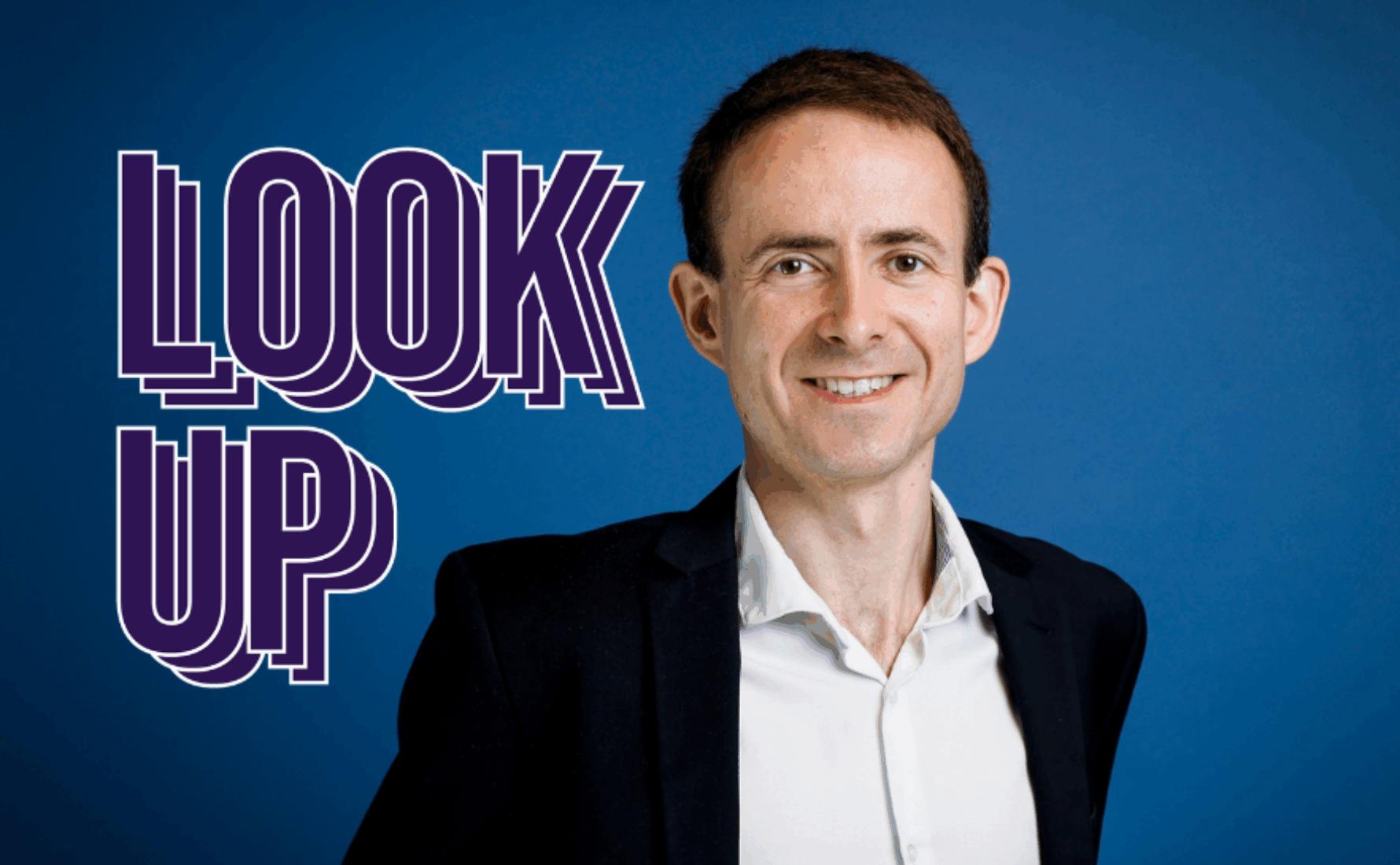
Charles Cortés, chief operating officer of Converteo Spain, supports brands in optimizing their acquisition performance and leveraging data. Damián Bourgeois, director of Dataiads, is a specialist in product feeds and their activation across all channels.
Key takeaways
- Your product feed is your true commerce API. This is what Google, marketplaces, and now LLMs read. An incomplete or ambiguous feed produces approximate recommendations — and makes you disappear from AI-generated answers.
- Platforms reward rich data, now down to the variant level. Each color, size, or material requires its own title, attributes, images, and structured data. At the scale of thousands of references, this is impossible by hand: AI becomes a leverage for industrialization.
- The right result never comes from AI alone. It comes from a combination of well-contextualized models, framed by business rules and human validation. It is this mechanism that eliminates hallucinations and guarantees compliance with channels.
Everything converges to a single point: the quality of the product feed. Whether it is SEO, marketplaces, acquisition campaigns, or new conversational agents, it is the feed that determines visibility. Historically, acquisition and SEO were treated separately; today, platforms and agents analyze data as a whole. The consequence: we must now think product, and no longer channel.
Why the feed has become strategic
Your product pages and your feed constitute your commerce API: the source that Google, marketplaces, and LLMs read to understand, compare, and recommend your products. If the information is incomplete or ambiguous, the AI’s recommendation will be just as approximate. Structuring means taking back control.
Concretely, product activation consists of connecting different sources (feed, Google Merchant Center, site data, customer analytics), applying rules and segmentations, then enriching the data with language models and multimodal capabilities (text, image, video), all accompanied by a control and validation layer.
What platforms expect now
The push concerns everything transmitted to merchant centers: Google Merchant Center, Microsoft, Meta Business Manager, and by extension, LLMs, since Google relies, for example, on GMC data for its recommendations and its AI Overviews. During the UCP announcement at the NRF in Las Vegas, Google emphasized three areas: more explicit and complete titles, more structured and usage-oriented descriptions, and multiple visual elements, including lifestyle images adapted to each format.
The objective is twofold: to improve media performance (better ROAS on Google Shopping and PMax) and to allow AI systems to better understand and compare products. It is not about reproducing the product page identically, but about building structured data, designed for the platform that will receive it.
The challenge of scale and variants
The difficulty appears at a large scale. Applying these recommendations to fifty or one hundred references remains feasible manually; on tens or hundreds of thousands, it is impossible. Especially since platforms demand more and more attributes, now down to the variant level: a different color, size, or material requires its own title, specific attributes, consistent images, and structured data.
The more complete a product is, the better the algorithm understands it, the more visible it becomes, and the better it performs. This is where AI becomes a leverage for industrialization: it enriches, optimizes, and creates text attributes, while vision models analyze existing images to better describe products and select the most effective visuals.
The method: AI + rules + human control
AI alone is not enough — the risk of hallucination (a title that is too long, not compliant with GMC rules) is real. The method chosen by Detalada combines three ingredients.
First, a title is generated from all product data (the context) and channel best practices. Then, business rules apply — for example, 150 characters maximum; if the title exceeds this, it goes back through the AI until compliant. Several models are put in competition in parallel, and another model selects the best result. Finally, human validation occurs in sensitive cases.
The lesson is clear: the best result almost never comes from a single model, but from a combination of well-contextualized models, supervised by a human.
From raw feed to enriched feed: the before/after
A raw feed means partial information, a truncated title, poor or absent attributes: the machine poorly understands the product and its distribution remains limited. An enriched feed means a complete and structured title, rich attributes, clear and actionable products in GMC.
Structuring the data (specifying the material, color, category, style) facilitates indexing, matching, and scoring. Result: a better understanding by the algorithm, a better score, more qualified impressions, and therefore a better CTR and a better ROAS. The same logic applies to images: adding relevant ones, adapting formats to GMC requirements, and ensuring that each visual exactly matches the displayed variant.
The Feu Vert case: +32 % ROAS
The Feu Vert Spain case illustrates the approach concretely: more than 12,000 highly technical references (tires, accessories, auto parts, car radios), a feed that worked but lacked detail, which Google Shopping and PMax algorithms penalize. After a clear push strategy (feed authority through AI, activation on GMC), ROAS increased by more than 32%.
And this case goes far beyond Google Shopping: the same enriched feed is what will make products visible in ChatGPT, Perplexity, and all emerging agents. In other words, today’s push is tomorrow’s visibility in agentic commerce.