B2B Promotions: The End of Wasted Budgets

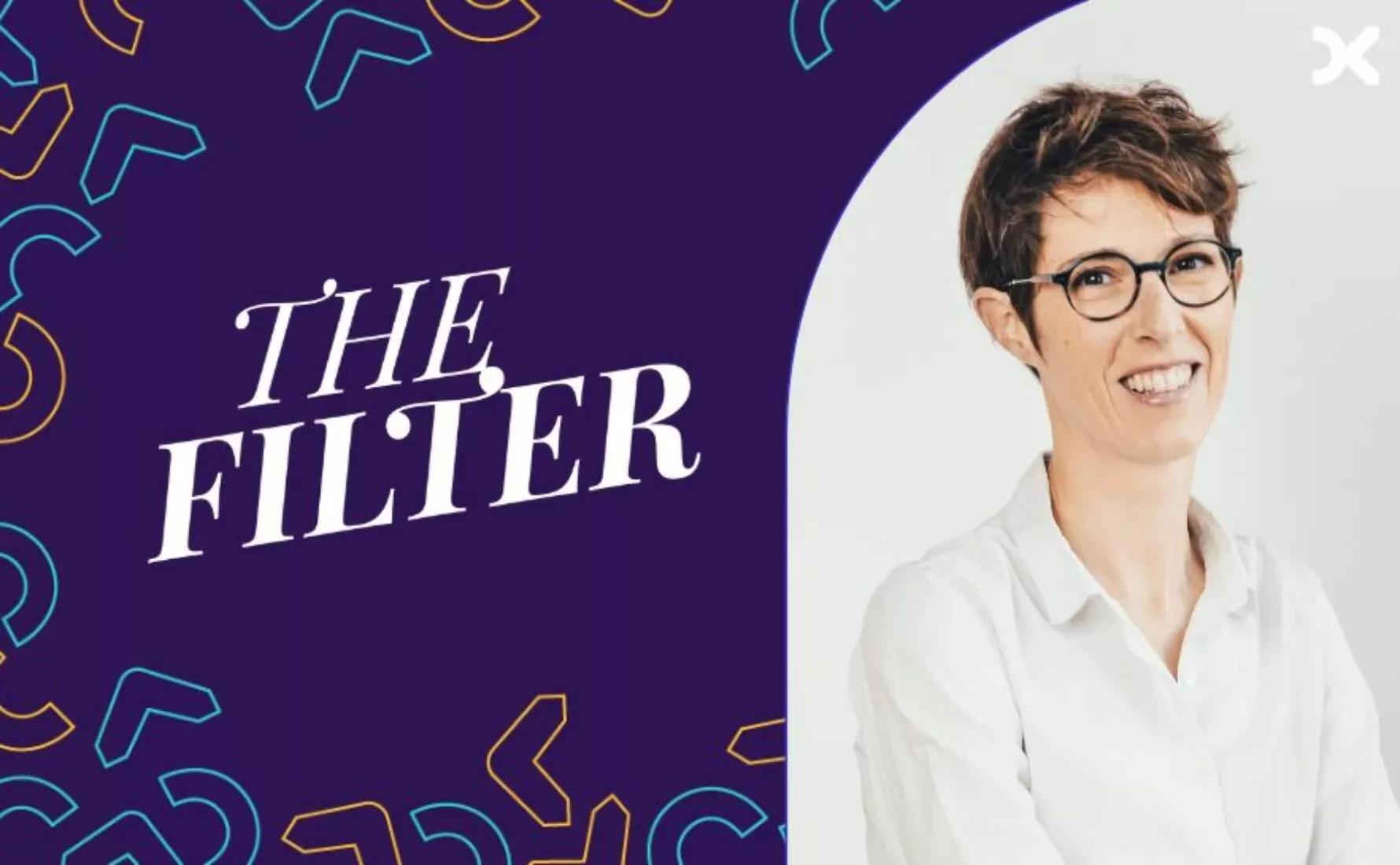
As a Partner in Converteo’s Pricing & Sales Excellence practice, Emilie Gariel helps companies structure and accelerate their pricing performance. Sitting at the intersection of strategy, operations, and tech, she helps Pricing leaders industrialize their methods, deploy the right tools, and leverage data to maximize margins.
Key Takeaways
- Over 60% of companies fail to measure their promotional effectiveness. Among the remaining 40%, very few actually do it right.
- Promotions have become a knee-jerk reaction driven by fear rather than strategy. Brands copy competitors without measuring or questioning the impact.
- Gross volume uplift is a flawed metric. Between pull-forward effects, cannibalization, and seasonality, if you aren’t rigorously modeling the data, you are just kidding yourself.
- A 30% price cut demands a 300% volume increase just to break even on margin. Most companies never do this math before pulling the trigger.
- Today, AI and data modeling let you build a proactive, predictive promotional calendar—but getting there requires a real data strategy and hard backing from executive leadership.
Let’s be honest: who would repeatedly invest tens or hundreds of millions of dollars a year without knowing if it yields a return? In theory, no one. Yet, that is exactly what most companies do with their promotional budgets.
Over 60% of companies do not measure promotional effectiveness. For the 40% that do, the metrics are usually too fragmented and superficial to drive strategic decisions. In B2B, promotions account for 3% to 15% of total revenue on average—and up to 20% in some sectors. This is not a marginal line item. It is a massive growth lever that is too often pulled completely blind.
The question isn’t whether a company should run promotions. The real questions are: why are they running them, and do they actually work?
The Vicious Cycle: When Fear Replaces Strategy
The endless promotional arms race is rarely driven by deliberate strategy. It is driven by fear. Fear of losing volume. Fear of losing ground to a competitor’s flash sale. Fear of missing a market window.
The cycle operates like clockwork: one player launches a promo, their competitors copy them, and customers get hooked, constantly demanding deeper discounts. The beast feeds itself. We end up in a paradigm where promotions no longer stimulate pricing; they replace it.
An often-overlooked organizational reality reinforces this trap: in many companies, tactical marketing teams manage promotions. They are incentivized to execute, not to challenge the status quo. Meanwhile, executive leadership rarely has clear visibility into the actual ROI of these investments.
The result? You just repeat what you’ve always done. The most common answer to “why are we running this promo?” is “because we always do.” And if you ask what the expected outcome is, the answer is usually: “Sales. Hopefully slightly better than last year.”
How to Accurately Measure Promotional ROI
Step one is assigning every promotion a clear strategic goal: acquisition, volume, retention, inventory clearance, or brand building. Not all promotions serve the same purpose, so they shouldn’t all be judged by the same metric.
But beyond setting goals, the measurement itself requires high precision. This is exactly where most companies get it wrong.
Measuring Promotions with Data
Building effective models requires structured historical data with actual variability. If you have run the exact same promotions, at the exact same times, with the exact same discounts for five years—and your competitors have done the same—you cannot separate the signal from the noise. Even when data exists, it is often scattered across PDFs, email threads, and unstructured files. Just piecing together a basic promotional calendar can burn weeks of work.
Modeling True Impact Beyond Gross Volume
The classic mistake is only tracking gross volume uplift. This is directionally flawed. A customer who buys three boxes of discounted detergent this week won’t buy any next week. This pull-forward effect can wipe out most of your apparent gains. Add in product cannibalization, positive category halo effects, and seasonality. Once you rigorously model all these factors, a 150% apparent uplift might net out at just 10%.
Then there is the math no one actually does before pulling the trigger: a 30% price discount requires a 300% volume spike just to maintain flat margin dollars. That number should be plastered on the wall of every boardroom where promotions are discussed.
Translating Insights into Business Decisions
Even when solid models exist and produce reliable insights, they are useless unless executive leadership gives teams the authorization to act—meaning the freedom to experiment, cut promotional intensity on specific segments, and kill off failing campaigns. That mandate has to come from the top. Without it, your analytics will just collect dust in a slide deck.
B2B Promotions: Moving to Proactive Management with AI
The good news is that the tools exist. Today, AI models allow you to go much further than simple post-mortem measurement.
A realistic roadmap rolls out in three phases. Within the first two to three months, you can deploy an initial model using existing, even imperfect, data. This instantly allows you to make informed decisions and flag clearly toxic promotions. Between 12 and 24 months, you enrich the model—layering in competitive data, saturation thresholds, and cross-effects—and feed the results of your field tests back into the system. After 36 months, you can deploy a true proactive cockpit: an engine that prescribes the exact right promotional mechanic, discount depth, duration, and calendar placement for any given context and business goal.
The ultimate stage—where this becomes a truly strategic advantage—is reintegrating promotions into your broader marketing mix. The real question is no longer “what promo should we run?” Instead, it becomes: “Given this context, target segment, and objective, should I pull the promo lever, invest in media spend, do both, or do nothing at all?”
What Converteo Built: The Promo Cockpit
At Converteo, we’ve spent years helping industrial enterprises and distributors transform how they steer their promotions. Two use cases perfectly illustrate the impact of this approach.
For a B2B professional distributor’s private label, two months was all it took to get the initial models running. The early findings were undeniable: highly structured national campaigns generated minimal returns, whereas localized, in-branch activations drove vastly superior results. This insight immediately reshaped their budget allocation.
For Michelin North America, the project recently hit the 12-month maturity mark. Local teams now hold the keys to the modeling tool and use it in their daily operations. The results? 40% of their campaigns were modified, and roughly half of those changes resulted in killing off the promotions entirely. That translates to recovered margin points and an organization that finally runs its promotional strategy proactively rather than reactively.
Among the most mature enterprises we work with, we routinely flag between 20% and 40% of promotions as “useless“—they neither drive enough volume nor turn a profit. Axing or overhauling them can unlock a full point of margin. That is a massive number on the bottom line.
Promotions are not a necessary evil. They are a tool. And like any tool, they must be wielded with precision, measured with extreme rigor, and driven by clear strategic intent. Today, AI and data modeling finally give us the power to trade gut instinct for true business intelligence.